Don’t Fall for Attractive Online Offers! Never Click Unknown Links or Share Your Mobile Screen
Online Fraud Safety Tips: Avoid Fake Refunds And Phishing Scams
Protect Yourself from Cashback Scams, Fake Refund Messages, Phishing Links and Screen-Sharing Fraud | Kotapride Cyber Suraksha Kavach
In today’s digital world, smartphones have become an essential part of our daily lives. We use them for online banking, UPI payments, shopping, bill payments, business transactions, communication and entertainment.
Technology has made our lives easier, faster and more convenient. However, cybercriminals are continuously finding new ways to misuse digital platforms and target innocent people.
One of the most common techniques used in online fraud is exploiting human emotions such as greed, fear, trust and urgency.
A message promising exciting cashback, an unexpected refund, a free gift or an urgent bank account update may look genuine. But behind an attractive offer or frightening warning, there could be a cyber fraud attempt.
The golden rule of digital safety is simple: STOP – THINK – VERIFY – TAKE SAFE ACTION.
Through the Kotapride Cyber Suraksha Kavach initiative, we encourage everyone to develop safe digital habits and protect themselves, their families and their communities.
1. Beware of Cashback, Refund and Reward Scams
Have you ever received a message saying:
- Congratulations! You have won a cashback reward.
- Your shopping refund is pending. Click here.
- Claim your free gift before the offer expires.
- You have won a special online prize.
- Receive an instant bonus by clicking this link.
Such messages can create excitement and encourage people to click without thinking.
Cybercriminals may use fake websites and suspicious links to collect personal information, banking credentials or other sensitive details.
Safety Tips:
- Never trust an attractive offer simply because it appears in an SMS or WhatsApp message.
- Avoid clicking unknown or suspicious links.
- Verify cashback and refund offers through the official website or application.
- Never enter your banking credentials on an unfamiliar website.
- Do not share OTP, UPI PIN, CVV or passwords.
Remember: An attractive offer should never become an opportunity for someone to steal your hard-earned money.
2. Fake Bank, Electricity Bill and e-Challan Messages
Imagine receiving an SMS:
“Your electricity connection will be disconnected tonight. Pay your pending bill immediately.”
Or:
“Your bank KYC has expired. Update your details immediately to avoid account suspension.”
Another message may claim that an e-Challan is pending and demand immediate payment.
These messages can appear genuine because scammers may imitate the names, logos and communication styles of trusted organisations.
The purpose is often to create panic and force you into taking immediate action.
How to Stay Safe:
- Do not blindly trust the sender’s name or message.
- Avoid clicking payment links received from unknown sources.
- Visit the official website or application independently.
- Contact your bank or service provider through verified channels.
- Never install an unknown APK file to resolve a payment or account issue.
Remember: Always verify first, then take action.
3. Screen-Sharing Fraud: Never Give Remote Access to Unknown Callers
This is one of the most important digital safety warnings for smartphone users.
Imagine that you are facing an online payment problem.
Someone calls you and claims to be a bank representative or customer support executive.
The caller says:
“Sir, I can help you receive your refund. Please install this screen-sharing application.”
Or:
“Allow me to see your mobile screen so I can solve your payment problem.”
STOP! This is a serious warning signal.
Some remote-access and screen-sharing applications can allow another person to view your mobile screen or interact with your device, depending on the permissions granted.
If you open your banking application, enter sensitive information or reveal an OTP while an unknown person has access, your financial security may be at risk.
Follow These Safety Rules:
- Never install a screen-sharing or remote-access application just because an unknown caller asks you to.
- Never grant remote access to an unverified person.
- Never open banking applications under the instructions of unknown callers.
- Never share OTP, UPI PIN or passwords.
- Contact your bank directly through its official customer-support channels.
Your mobile screen is your private space.
Don’t Share Your Screen With Unknown Callers!
4. Never Share OTP, UPI PIN, Password or CVV
Your financial credentials are private.
No genuine support representative needs you to disclose your OTP, UPI PIN, ATM PIN, CVV or banking password over a phone call.
Remember:
- OTP is confidential.
- UPI PIN is confidential.
- ATM PIN is confidential.
- CVV is confidential.
- Banking passwords are confidential.
You generally do not need to enter your UPI PIN to receive money. Entering it authorises a transaction.
Never approve an unknown payment request simply because someone claims that it will credit money to your account.
5. Understand the Three Warning Signals: Greed, Fear and Urgency
Cybercriminals often attempt to manipulate human psychology.
There are three important warning signals everyone should learn to recognise.
GREED – The Promise of Something Free
Free gifts, cashback, lottery prizes, rewards and unrealistic discounts can encourage careless clicking.
FEAR – The Threat of Something Bad
Your bank account will be blocked. Your electricity will be disconnected. A police case will be registered.
These threatening messages may be designed to make you panic.
URGENCY – The Pressure to Act Immediately
Click now. Pay immediately. Share your OTP. Complete your verification within five minutes.
When someone pressures you to make a financial decision without giving you time to think, stop the interaction and verify independently.
Don’t allow greed, fear or urgency to control your digital decisions.
6. What If You Accidentally Click an Unknown Link?
Sometimes people accidentally open suspicious links.
Do not panic. Opening a link does not automatically mean that money has been stolen.
However, take precautions:
- Close the suspicious website.
- Do not enter personal or banking information.
- Do not download unknown applications or files.
- If you entered passwords, change them using a trusted device.
- If you installed a suspicious application or granted remote access, disconnect access and seek trusted technical assistance.
- Inform your bank immediately if financial information or transactions are affected.
- Monitor your bank account for suspicious activity.
- Act quickly if you suspect that your information or money has been compromised.
7. What to Do If You Become a Victim of Online Financial Fraud?
Cyber fraud can happen to anyone. Students, professionals, business owners, homemakers and senior citizens can all become targets.
The most important thing is not to panic, hide the incident or delay reporting.
Follow these steps:
Step 1: Call 1930 immediately
Contact the National Cyber Financial Fraud Helpline as soon as possible.
Step 2: Inform Your Bank
Contact your bank through its official customer-care channel and report the fraudulent transaction. Ask for the necessary action to secure your account and payment instruments.
Step 3: File an Online Complaint
Visit the official National Cyber Crime Reporting Portal:
Submit the complaint and preserve your acknowledgement number.
Step 4: Preserve Evidence
Keep the following information:
- Transaction ID or UTR number
- Bank transaction details
- Suspicious phone numbers
- SMS and WhatsApp messages
- Screenshots and website links
- Any other relevant communication
Quick reporting can help authorities and financial institutions attempt to prevent further movement of the funds. However, recovery of money is not guaranteed.
8. Family Cyber Safety: Support Victims, Don’t Blame Them
Digital safety is not only an individual’s responsibility. It is a family responsibility.
Children, parents, senior citizens, homemakers and working professionals all use digital services.
Sometimes people hesitate to report online fraud because they fear that their family members will become angry or blame them.
This fear can delay important action.
If someone in your family experiences cyber fraud:
- Listen calmly.
- Do not criticise or insult the victim.
- Do not waste time blaming someone for making a mistake.
- Help them contact 1930 and their bank.
- Support them in filing the official complaint.
- Discuss what can be learned from the incident.
A supportive family can help prevent further loss and encourage timely reporting.
A safe family is one where people can speak about mistakes without fear.
9. Kotapride Cyber Suraksha Kavach – 10 Daily Digital Safety Habits
Make these habits part of your everyday digital life.
- Never click unknown or unverified links.
- Verify cashback, refund and reward offers through official sources.
- Never give screen-sharing or remote-access permission to unknown callers.
- Never share OTP, UPI PIN, CVV or passwords.
- Avoid installing unknown APK files and suspicious applications.
- Verify QR codes and payment requests before authorising transactions.
- Never make financial decisions under fear, greed or urgency.
- Regularly check bank transactions and account alerts.
- Report suspected financial cyber fraud immediately.
- Educate your family, friends, employees and community about digital safety.
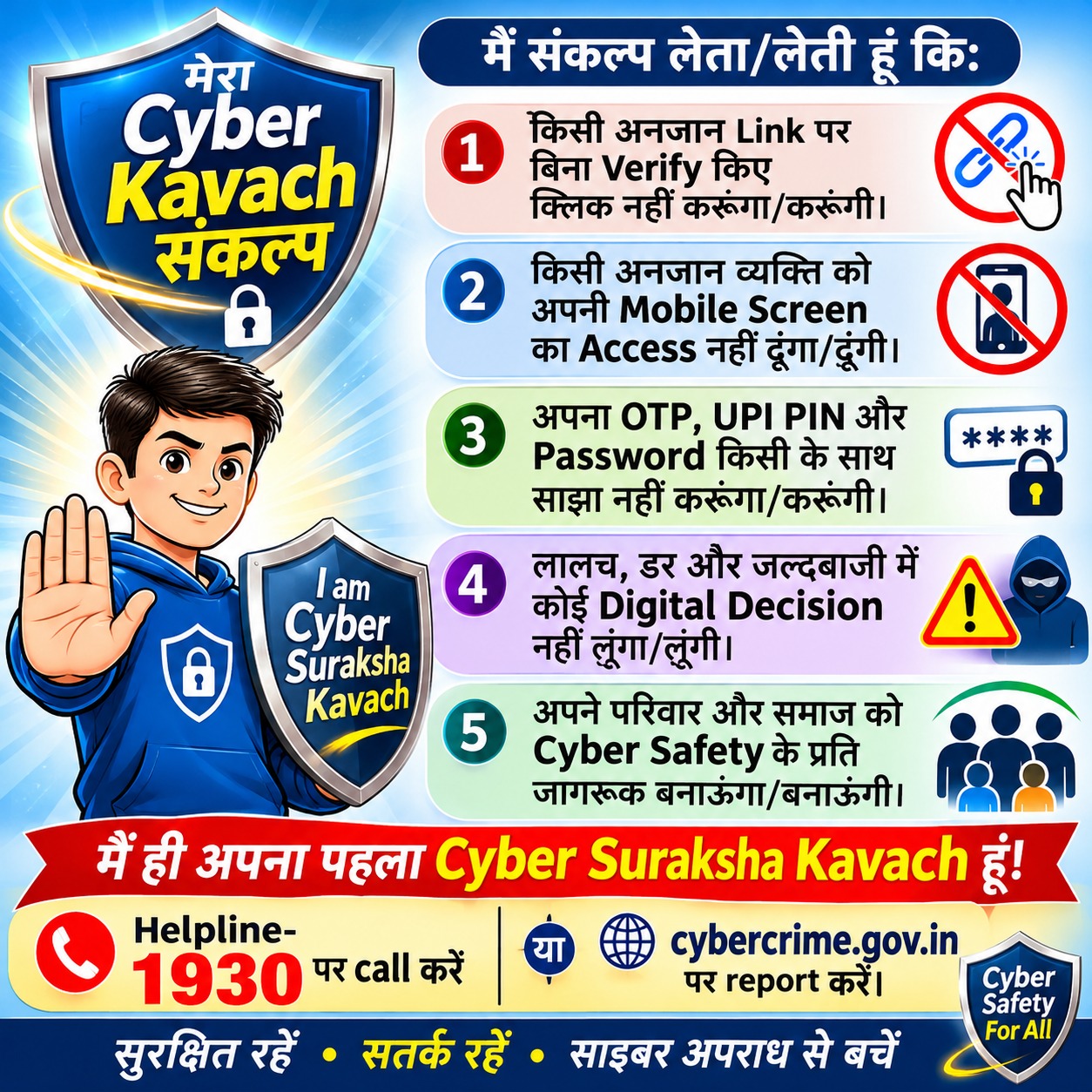
10. Take the Kotapride Cyber Kavach Pledge
Today, make a commitment to yourself and your family.
I promise that:
- I will not click unknown links without verification.
- I will not fall for attractive offers without checking their authenticity.
- I will never share my mobile screen with unknown callers.
- I will keep my OTP, UPI PIN and passwords private.
- I will not make financial decisions under pressure.
- I will report cyber financial fraud immediately.
- I will educate my family and community about cyber safety.
I AM MY OWN FIRST CYBER SURAKSHA KAVACH!
Final Message: Your Mind Is Your First Cyber Suraksha Kavach
Technology is not the enemy. Careless digital behaviour can create unnecessary risks.
We cannot stop using smartphones, online banking, UPI or digital services. But we can learn to use them more safely.
Cybersecurity does not begin only with antivirus software, firewalls or technical protection.
It also begins with our awareness, decisions and daily habits.
Before clicking, think.
Before trusting, verify.
Before sharing, check.
Before making a payment, understand.
And whenever something feels suspicious, stop.
STOP – THINK – VERIFY – TAKE SAFE ACTION.
Your Mind Is Your First Cyber Suraksha Kavach.
Build Awareness into a Habit, and Make Every Digital Action Safer.
KOTAPRIDE CYBER SURAKSHA KAVACH
An Awareness Initiative by Kotapride.
📞 National Cyber Financial Fraud Helpline: 1930
🌐 Official Cyber Crime Reporting Portal: https://cybercrime.gov.in
Stay Alert. Stay Safe. Spread Awareness.
Frequently Asked Questions (FAQs)
1. How can I identify a fake cashback or refund message?
Be cautious of unexpected rewards, urgent payment requests and suspicious links. Verify the offer independently through the official service provider.
2. Is screen sharing safe during a bank-related phone call?
Never give remote access or screen-sharing permission to an unknown or unverified caller. Contact your bank independently.
3. What is the cyber financial fraud helpline number in India?
Call 1930 immediately to report suspected financial cyber fraud.
4. Where can I report online cybercrime in India?
You can submit a complaint through https://cybercrime.gov.in.
5. What should I do if I accidentally share my OTP or UPI PIN?
Immediately contact your bank, secure your account and report any unauthorised transaction. If financial fraud occurs, call 1930.
6. How can families protect senior citizens from online scams?
Teach them to verify calls and messages, avoid unknown links, protect their credentials and ask trusted family members for help when something appears suspicious.
About Kotapride Cyber Suraksha Kavach
Kotapride Cyber Suraksha Kavach is a digital awareness initiative focused on encouraging responsible online behaviour and safer digital habits.
Our mission is to make cyber safety awareness accessible to everyone, from children and senior citizens to professionals, entrepreneurs and families.
We believe that digital knowledge combined with regular practice can create stronger habits and a safer digital society.
Awareness is the first step. Daily practice is the real protection.